Torque, Power & RPM Calculator | kW, PS, hp
This tool lets you calculate one of torque, power, or RPM based on the other two. Enter values and press 'Calculate'.
Torque, power, and RPM are crucial parameters for understanding the performance of engines and motors. This tool allows you to calculate and convert between these values.
You can calculate output from torque and RPM, or determine RPM from power and torque. Conversions between different units such as kW, PS, and hp are also supported.
P = T × N ÷ 9549(P: kW T: Nm N: rpm)Input
Result
T = P × 9549 ÷ N(P: kW T: Nm N: rpm)Input
Result
N = P × 9549 ÷ T(P: kW T: Nm N: rpm)Input
Result
Input
Result
Input
Result
How to Use This Tool
Follow these steps to get your result:
- Select the value you want to calculate using the tabs at the top (Torque, RPM, or Power)
- Enter the two known values along with their units
- Press the Calculate button to get the result instantly
- Use the unit converter tabs (Power / Torque) to quickly convert between kW, PS, hp, Nm, kgf·m, and more
The unit converter tabs are handy when you only need to switch units without performing a full calculation.
What’s the Difference Between Torque and Horsepower?
Torque is the force that causes rotation, while horsepower is the rate of work done by that torque at a given rotational speed. Using a bicycle as an example: pushing hard on the pedals uphill represents torque, spinning fast represents RPM, and their product is horsepower.
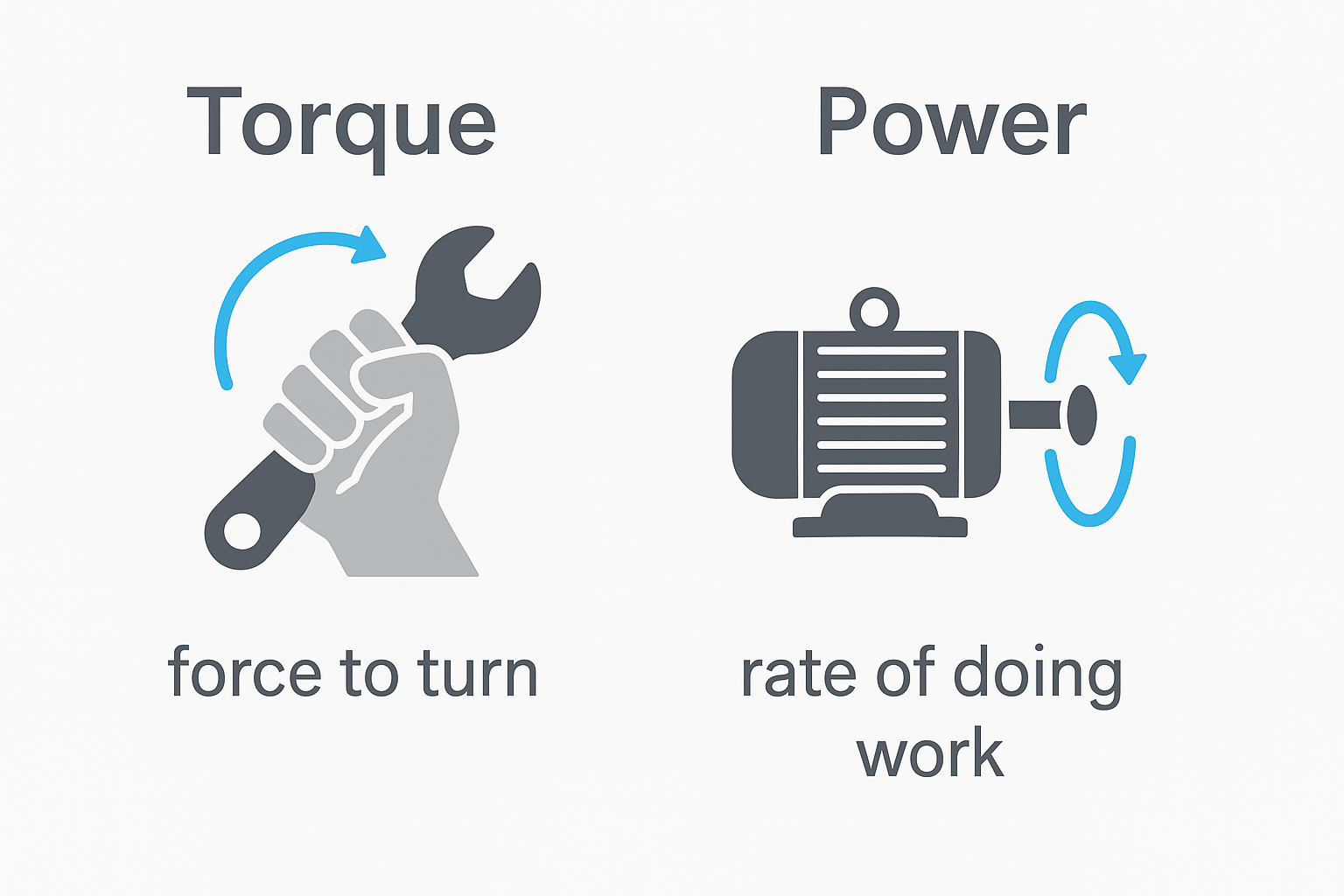
Engine power can be calculated using the following formula:
Even with the same torque, a higher RPM results in greater power output.
| Term | Meaning | Units |
|---|---|---|
| Torque | Rotational force | Nm, kgf·m |
| Power (Horsepower) | Amount of work per unit time | kW, PS, hp |
About the Power Calculation Formula
Engine power (in kW) can be calculated from torque and RPM using the following equation:

P [kW] = (2π / (60 × 1000)) × R [min⁻¹] × T [Nm]
The variables in this equation represent:
- P: Power (in kilowatts)
- R: Rotational speed (per minute, RPM)
- T: Torque (in newton-meters)
The constant part is approximately:
2π / (60 × 1000) ≈ 0.00010472
In short, even with the same torque, increasing RPM results in higher power.
Common Use Cases
Checking Automotive or Motorcycle Engine Performance
You can back-calculate the RPM at peak power from catalog torque and power figures, or determine output from measured torque and RPM. It's also useful for verifying performance changes after engine tuning.
Selecting Industrial Motors and Equipment
When choosing a motor for conveyors, pumps, or other machinery, calculating the required power (kW) from torque and operating RPM helps you select a motor with the right rating — avoiding both over- and under-sizing.
Study and Exam Preparation
Use this tool to practice torque, power, and RPM problems found in mechanical engineering or automotive engineering courses and exams. It's ideal for building intuition by trying different values.
Frequently Asked Questions (FAQ)
- Are PS and hp the same thing?
- Not quite. PS is the metric horsepower used in Japan and Europe (1 PS ≈ 0.7355 kW), while hp is the imperial horsepower common in the US (1 hp ≈ 0.7457 kW). The difference is about 1.4%, which is negligible for everyday use, but worth distinguishing when precision matters.
- Does more torque always mean more horsepower?
- Not necessarily. Power equals torque multiplied by RPM, so high torque at low RPM can still result in modest power output. Conversely, a small high-revving engine can produce strong power with relatively low torque.
- What is RPM? Is it different from min⁻¹?
- RPM stands for Revolutions Per Minute, which is the same as min⁻¹. The Japanese industrial standard uses min⁻¹ as the official notation, but RPM is the term you'll typically see in automotive and machinery contexts.
- What is kgf·m, and how does it differ from Nm?
- kgf·m (kilogram-force meter) is a torque unit from the older gravitational unit system. The conversion is: 1 kgf·m = 9.80665 Nm. You may still encounter kgf·m in older datasheets or service manuals, so it's good to know the relationship.
Go to the Engine Displacement Calculator
If you don't know your engine's displacement, you can easily calculate it using our displacement calculator. Just enter bore, stroke, and cylinder count.